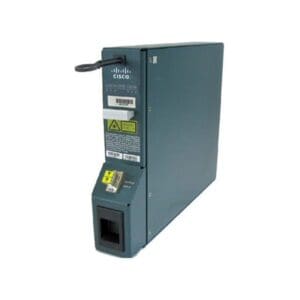
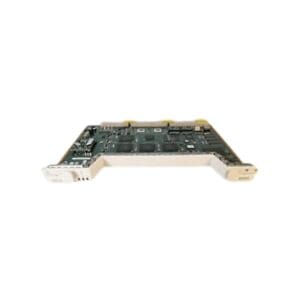
Refurbished 15454-DS3XM-12 Cisco ONS SONET Transmux Card
$7,810Refurbished 15454-DS3XM-12 Overview
Cisco ONS SONET Transmux Card For Cisco ONS 15454 Multi-service Platform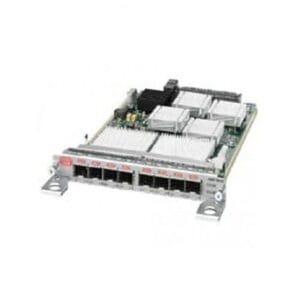
Refurbished A900-IMA8S Cisco Gigabit Ethernet expansion module
$226Refurbished A900-IMA8S Overview
Cisco ASR 900 series Ethernet interface modules are designed to give customers a high degree of flexibility and value. All Ethernet interface modules share a common core that supports time stamping on the module for Y.1731 operations, administration, and maintenance (OAM) delay measurement functions to achieve precise results for one-way and two-way delay measurement. The modules also provide time-stamping functions for the IEEE 1588-2008 protocol. These time stamps help ensure that the Cisco ASR 900 Series Aggregation Services Routers achieve outstanding results when deploying IEEE 1588-2008 protocols for frequency and phase synchronization. Not all customers will deploy IEEE 1588-2008 for synchronization; therefore, the Ethernet interface modules also support input and output frequency synchronization using synchronous Ethernet (SyncE).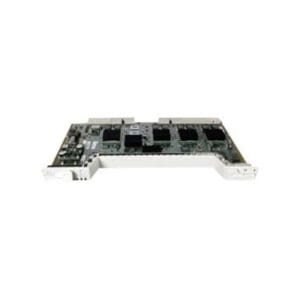
Refurbished 15454-DS3EC1-48 Cisco Interface Card expansion module
$1,680Refurbished 15454-DS3EC1-48 Overview
Cisco Interface Card expansion module DS-3/EC-1 x 48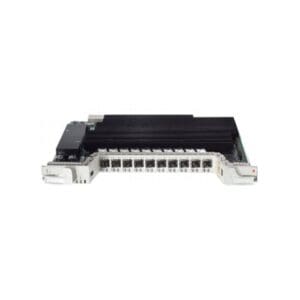
Refurbished 15454-CE-MR-10 Cisco CE Series Multirate Ethernet Card
$6,570Refurbished 15454-CE-MR-10 Overview
Cisco CE Series Multirate Ethernet Card expansion module. Through its portfolio of Ethernet service cards, the Cisco ONS 15454 MSPP has enabled service providers and enterprises to effectively and efficiently expand their network capability from transporting only time-division multiplexing (TDM) services to delivering multiple services over a single, converged architecture and eliminating the need for multiple overlay infrastructures.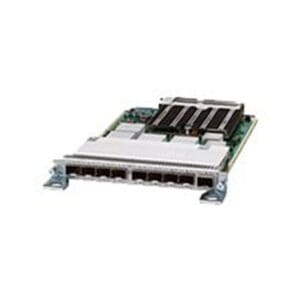
Refurbished A900-IMA8CS1Z-M Cisco Interface Module expansion module
$1,719Refurbished A900-IMA8CS1Z-M Overview
A900-IMA8CS1Z-M=ASR 900 Combo 8/16 port GE SFP/C-SFP and 1 port 10GE SFP+ / 2 port 1GE C-SFP Interface Module, Spare Cisco ASR 900 Series Interface Modules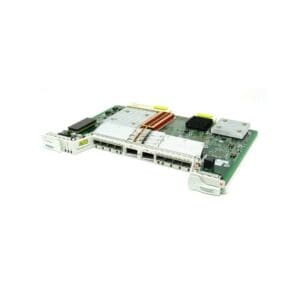
Refurbished 15454-AR-MXP Cisco Muxponder Card
$6,500Refurbished 15454-AR-MXP Overview
Metro transport networks must support numerous service demands: transmission of low-rate 10/100BASE-T and OC-3/STM-1 signals; higher-rate OC-12/STM-4, Gigabit Ethernet, OC-48/STM-16 signals; video signals such as standard-definition Serial Data Input (SDI) and high-definition SDI (HD-SDI); optical-transport-unit-1 (OTU-1) services; and first-generation (1G), 2G, 4G, and 8G Fibre Channel services. The flexibility to support multiple rates and aggregate them over a dense wavelength-division multiplexing (DWDM) interface using OTN technology brings huge savings in operating and management costs.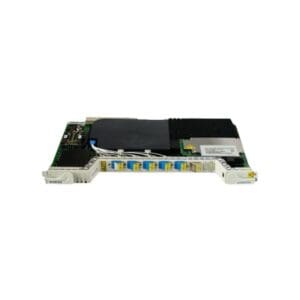
Refurbished 15454-40-SMR2-C Cisco Single Module ROADM multiplexer
$38,550Refurbished 15454-40-SMR2-C Overview
Cisco NCS 2000 Flex Spectrum Single Module ROADM line cards create an agile DWDM layer forming the foundation for converged transport architectures, delivering features that allow programmability and agility in provisioning and recovery operations. Wavelength add/drop and routing are entirely software-driven, which eliminates manual operations, helps decrease operating expenses (OpEx), and reduces provisioning and recovery times.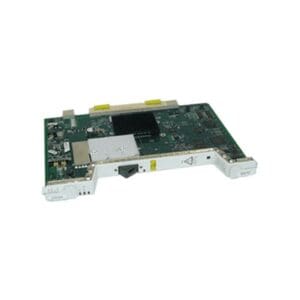
Refurbished 15454-10G-XR Cisco Based Multiple-Reach Optics Cards
$275Refurbished 15454-10G-XR Overview
The Cisco ONS 15454 OC-192/STM-64 XFP-based optics card provides a single XFP-based pluggable optics module. The multiple-rate optics card operates in either Cisco ONS 15454 SONET or SDH systems, providing multiple-reach capabilities including short-reach/inter-office (SR/IO), intermediate-reach/short-haul (IR/SH), and long-reach/long-haul (LR/LH). Additionally, the SR/IO-only card provides a cost-effective, fixed SR/IO configuration to support first cost-sensitive installations where flexibility is not paramount.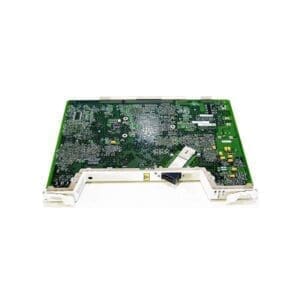
Refurbished 15454-10G-S1 Cisco Based Optics Cards expansion module
$6,500Refurbished 15454-10G-S1 Overview
The Cisco ONS 15454 OC-192/STM-64 XFP-Based Optics Card provides a single XFP-based pluggable optics module. The multiple-rate optics card operates in either Cisco ONS 15454 SONET or SDH systems, providing multiple-reach capabilities including short-reach/inter-office (SR/IO), intermediate-reach/short-haul (IR/SH), and long-reach/long-haul (LR/LH). Additionally, the SR/IO-only card provides a cost-effective, fixed SR/IO configuration to support first cost-sensitive installations where flexibility is not paramount.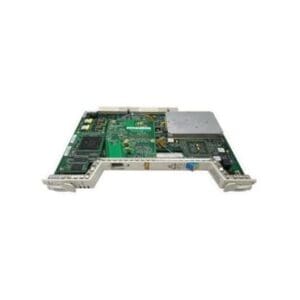
Refurbished 15454-10EX-L1-C-RF Cisco 4x 2.5-Gbps Muxponder Card
$3,229Refurbished 15454-10EX-L1-C-RF Overview
Cisco 4x 2.5-Gbps Muxponder Card EFEC Full C-Band Tunable expansion module.
Refurbished 14X10GBE-WL-XFP Cisco CRS-3 14-Port 10GE module
$629Refurbished 14X10GBE-WL-XFP Overview
Cisco CRS-3 14-Port 10GE LAN/WAN-PHY Interface Module expansion module